
The workplace continues to be a critical driver of enterprise success, but recent research reveals troubling trends that demand urgent attention. Gallup’s latest findings show that employee engagement has dropped to its lowest level in a decade, with only 31% of U.S. employees feeling engaged. This decline underscores the growing challenge organizations face in fostering motivation and connection, particularly among younger workers and those in hybrid or remote roles.
This year, macro forces such as the ongoing adoption (or rejection) of hybrid work models and employees’ growing demand for meaningful work are reshaping how businesses operate. Enterprises must balance the flexibility employees desire with the need to foster in-office engagement, creating environments where purpose-driven roles take center stage. The challenge is aligning organizational goals with employee aspirations, but the opportunity to create thriving, adaptable workplaces has never been greater.
The workplace has evolved into more than just a physical location; it is now a complex ecosystem of digital tools, human interactions, and cultural touchpoints. By understanding and addressing the key trends shaping 2025 — and by actively investing in solutions that bridge the gap between employee engagement and organizational performance—, enterprises can position themselves to succeed in a competitive and rapidly changing landscape.
Key Workplace Trends for 2025
Office Orchestration & Workplace Collaboration
The dynamics of how, when, and why employees are showing up continue to evolve—dramatically affecting office attendance patterns. While average occupancy rates have hovered around 50% in recent years, peak day attendance—typically on Tuesdays, Wednesdays, and Thursdays—has steadily increased. This trend reflects a growing alignment between company expectations and employee preferences, offering a glimpse of what works in today’s hybrid environment.
To manage these complexities, enterprises are adopting smarter tools that facilitate seamless collaboration for hybrid teams. AI and automation are emerging as essential players, optimizing workplace efficiency through features like intelligent space reservations , real-time occupancy analytics, and personalized workspace recommendations. These technologies help cut friction and create a streamlined office experience that caters to both individual needs and team dynamics. Explore the full framework for workplace ROI and efficiency.

New intelligent features like Modo’s My Circle empower employees to see which of their coworkers will be in the office, enabling better planning, more effective collaboration, and avoiding the frustration of arriving to find their team absent. By personalizing workspace layouts and providing tools like My Circle, along with easy access to resources and colleagues, these innovations boost productivity, strengthen engagement, and foster a sense of connection.
An emerging opportunity lies in leveraging “magnet” individuals—those who naturally attract others to the office. By identifying these key influencers and ensuring they have access to sufficient surrounding desks and spaces, enterprises can amplify their collaborative impact. This strategic approach not only boosts teamwork but also helps create a workplace environment that feels purposeful and dynamic.
Employee-First and Experience-Driven Workplaces
The modern workplace is no longer just about productivity; it is about creating environments that prioritize employee well-being, satisfaction, and connection—all of which tie back to our experiences.
Experiences shape our lives—what we see, smell, touch, and feel profoundly impact our emotions and behaviors. This extends to how we move to, from, and within the workplace itself.
From the morning commute to interactions within office walls, every sensory experience influences how employees perceive their work environment and, ultimately, their level of engagement.
Gen Z’s Role In Redefining Engagement
As we look to the future, Generation Z—poised to make up nearly half of the U.S. workforce within five years—will play a critical role in reshaping workplace expectations. Yet, this cohort is entering the workforce with challenges. Only 31% of Gen Z employees feel holistically healthy, with declining engagement levels highlighting key areas of concern (MetLife Workplace Study). In particular, Gen Z employees reported being:
- 5 points less engaged than the prior year (Gallup).
- Facing notable declines in fundamental engagement elements, such as:
- Clarity of expectations.
- Recognition for their work.
- Access to tools and resources to perform effectively.
- Opportunities to leverage their strengths.
- Feeling cared about as individuals.
- Opportunities for growth and development.
Despite these challenges, Gen Z is also fearless and gifted in designing innovative approaches to work and collaboration. They are leading the way in fostering a shift from an “I” mindset to a “We” culture, emphasizing collective well-being and inclusivity.
Employers who focus on creating experience-driven workplaces that address unique needs that are applicable across all generations —holistically healthy environments, clear communication, recognition, and growth opportunities—can unlock the potential to build workplaces that are not only productive but also profoundly connected and purpose-driven.
Building Workplaces That Engage and Retain Talent
With Gen Z redefining workplace expectations and engagement levels on the decline, the case for experience-driven workplaces has never been stronger. Much like customer experience shapes loyalty and success, employee experience has become a vital differentiator, directly impacting organizational performance and growth.
Consider this: acquiring new customers costs five to 10 times more than selling to current ones, and existing customers spend 67% more on average than new ones (BIA Advisory). Companies focus on delivering excellent customer service because retention drives long-term growth. The same principle applies to employees. Retaining and engaging current employees is more cost-effective—and more impactful—than constantly recruiting replacements. Just as customer loyalty drives profitability, employee loyalty drives innovation, productivity, and retention.
Experience-driven workplaces are designed to make employees feel valued, connected, and motivated. These workplaces go beyond perks and benefits to focus on the day-to-day realities of work: personalized wellness programs, tailored career development opportunities, integrated communications, and physical environments that inspire collaboration and creativity. When employees feel seen and supported, their loyalty, productivity, and innovation soar.

A practical way to create such an environment is by using an employee experience map. This tool identifies critical touchpoints in an employee’s journey—from onboarding and team integration to career growth and eventual transitions—and highlights areas for improvement. For example, onboarding is a key moment when new hires either feel welcomed and set up for success or disoriented and disconnected. Similarly, opportunities for skill development and clear paths for career advancement are critical for retaining talent. By connecting these touchpoints, organizations can craft a cohesive and rewarding workplace experience that aligns with employee needs and organizational goals.
Get a glimpse of an employee’s daily journey – Meet Emma!
Imagine Emma, a mid-level professional, whose experience is enhanced by a personalized onboarding process, frequent recognition for her contributions, and access to flexible work options that allow her to balance her personal and professional life. By addressing key moments in her employee journey, the organization ensures Emma feels empowered, engaged, and motivated to grow within the company.
Enterprises investing in employee-first initiatives such as mental health resources, flexible work options, and robust recognition programs are leading the way in reshaping the modern workplace. These efforts are not just about creating a pleasant environment; they demonstrate the power of designing workplaces that center around people, making employees feel indispensable to the organization’s success. These types of enhancements set businesses apart and create a competitive advantage that not only attracts, but retains talent – having lasting impact on your workplace experience ROI.
Ultimately, the modern workplace thrives when it is intentional. By focusing on the moments that matter most—both the big milestones and the everyday interactions—organizations can transform their offices into places where employees feel empowered, connected, and eager to contribute. When the workplace becomes a space that truly enhances the employee journey, it builds a foundation for long-term engagement, collaboration, and growth.
Job Roles Getting Involved in Workplace Experience (WX)
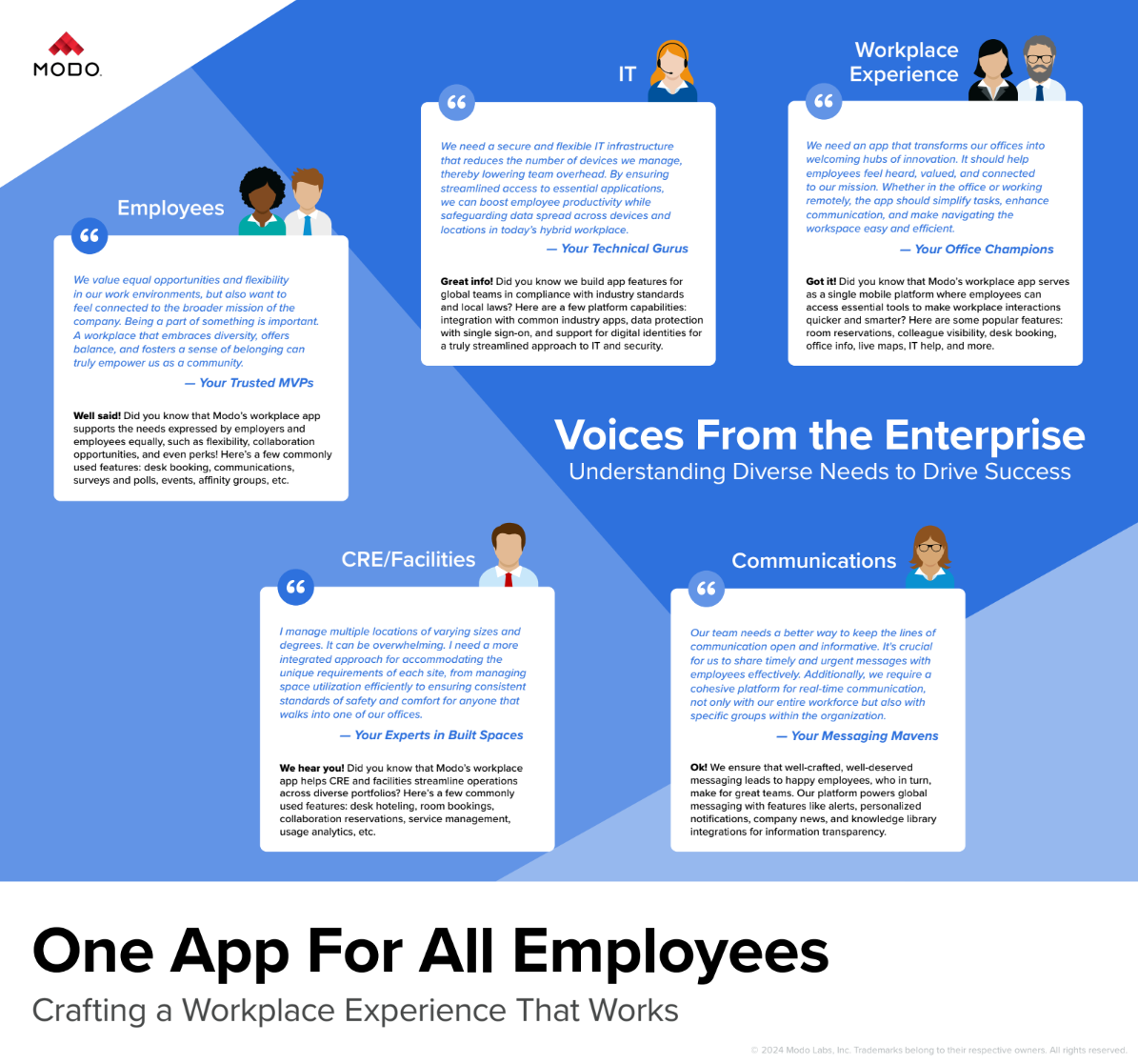
Workplace experience (WX) has emerged as a top cross-functional priority, bringing together diverse roles as key stakeholders. Over the years, the spotlight has shifted—from IT teams focused on streamlining tools to improve ROI, to workplace experience teams enhancing on-site services and driving digital transformation, to corporate real estate (CRE) leaders balancing real estate portfolios with fluctuating occupancy trends and optimizing the office footprint.
Now, in 2025, the pendulum is swinging toward other critical departments, particularly HR and internal communications, which are taking on more prominent roles in shaping the future of WX.
These roles are laser-focused on delivering clear communication outcomes—from informing employees and driving behavior change to fostering alignment with organizational goals.
Human Resources: Redefining Engagement in Workplace Experience
HR is evolving from its traditional functional role into more of a strategic partner in creating an engaging and holistic workplace experience. As Gartner points out, HR faces several key challenges: integrating strategic planning with business objectives, navigating AI’s transformative impact on workforce dynamics, and addressing the growing scarcity of critical talent. To meet these challenges, HR must prioritize the complete employee journey, nurturing both individual potential and organizational inclusivity.
To understand the importance of building an experience-driven workplace, it’s essential to learn the POV of those who are leading the charge. Here’s a perspective from Human Resources groups.

Key strategies for HR in 2025 include:
- Redesigning onboarding processes to foster early engagement and set employees up for long-term success.
- Conducting regular pulse surveys to monitor employee well-being and satisfaction in real time.
- Supporting continuous learning and flexible work arrangements to meet the evolving needs of a diverse workforce.
- Leveraging data-driven insights to position HR as a top-tier function within executive leadership, driving impactful decision-making.
Internal Communications: Optimizing Connections Across the Enterprise
Internal communications teams are stepping up to tackle one of the modern workplace’s biggest challenges: information overload. By rethinking how information is shared—from traditional newsletters to dynamic in-app notifications—these teams are ensuring employees stay informed, engaged, and aligned with organizational goals. They’re also addressing generational and regional preferences to create a more personalized communication strategy.
Here’s a perspective from Communications teams.

Key priorities for internal communications in 2025 include:
- Streamlining communication channels to eliminate redundancy and ensure clarity.
- Addressing employee information overload that often leads to burnout, anxiety, and stress.
- Crafting transparent, proactive messaging during organizational changes to build trust and avoid missteps.
By collaborating closely with leadership and focusing on these strategic initiatives, HR and internal communications teams are poised to play a pivotal role in creating a seamless, connected, and impactful workplace experience as part of a holistic team full of key stakeholders, influencers, and practitioners.
Strengthening Workplace Culture in 2025
As HR and internal communications continue to evolve their influence on workplace experience, their efforts directly tie into a critical cornerstone of enterprise success: workplace culture. A well-designed culture is more than just an abstract concept—it’s a tangible driver of employee engagement, trust, and long-term organizational success.
Culture Exists, Intentional or Not
A strong, connected workplace culture forms the backbone of thriving enterprises. But culture doesn’t simply happen; it’s cultivated intentionally—or it risks being shaped by default.
In the modern workplace, perks alone can no longer define an exceptional culture. Trust, inclusion, and purpose must take center stage. Collaboration, camaraderie, and shared goals consistently emerge as key indicators of workplace excellence. However, this isn’t a top-down exercise; employees must play an active role in shaping a culture that resonates with their values and lived experiences.
From the very first day, onboarding creates a crucial impression that sets the tone for an employee’s journey. Yet, it’s the sum of countless micro and macro interactions throughout their tenure that truly reflects and reinforces workplace culture.
Cultural priorities also vary by industry. For instance, high-tech organizations often emphasize flexibility and digital transformation, while financial services lean into values like security and
trust. Meanwhile, law firms might place a premium on white-glove, concierge-style services.
While leaders can attract employees with competitive pay, true retention and motivation stem from cultivating an engaged and supportive culture. Alarmingly, U.S. employee engagement has hit a 10-year low (Gallup), underscoring the urgency for intentional cultural and experience-driven strategies.
Best Practices for Strengthening Workplace Culture
To foster trust and collaboration across teams, enterprises should focus on:
- Creating shared goals: Align employees around clear, measurable objectives that reinforce a sense of purpose.
- Encouraging open communication: Leverage digital tools for consistent feedback and transparent dialogue.
- Investing in leadership development: Equip managers with skills to lead with empathy, adaptability, and inclusivity.

In hybrid and remote work environments, building interpersonal connections and collaboration requires deliberate effort. People-focused strategies—such as virtual team-building activities, inclusive leadership practices, and recognition programs—are critical in bridging the physical gaps between dispersed teams.
Ultimately, workplace culture is not a one-time initiative but a continuous commitment to align organizational values with everyday practices and employee experiences. By embedding culture into every aspect of the workplace, enterprises can position themselves to thrive in 2025 and beyond and earn their spot on the Best Places to Work lists.
Preparing for the Future of Work
As enterprises navigate the evolving workplace landscape, it’s clear that a comprehensive and long-term workplace experience strategy is no longer optional—it’s essential. Strengthening workplace culture, orchestrating seamless collaboration, and fostering employee-first environments require a cross-functional approach, with HR, IT, internal communications, and other key departments working together to deliver exceptional employee experiences.
Workplace innovation and adaptability are critical to addressing the complex dynamics of hybrid work, from aligning with office magnet strategies to leveraging AI and mobile apps for streamlined collaboration and personalized experiences. But the need for action is urgent, especially as we witness significant engagement drops across the workforce. Gen Z, who will soon make up nearly half of the workforce, is already feeling disconnected. With engagement levels dropping and their holistic health on the decline, businesses must address this gap now—before the loss of engagement becomes irreversible. This generation holds the future of the business, and organizations must invest in experiences that foster connection, purpose, and growth to retain this critical talent.
Experience-driven workplaces understand that every interaction matters. From the sensory experiences employees encounter on their way to work to the touchpoints that define their career journey, these workplaces emphasize intentional design, flexibility, and personalization. They also reflect the lessons learned from customer experience—retaining and engaging employees is as vital as attracting them, driving long-term success for organizations.
Now is the time to invest in workplace experience. Enterprises that embrace innovation, prioritize collaboration, and focus on employee well-being and satisfaction will not only thrive in 2025 but will redefine what it means to create a modern workplace that nurtures engagement, loyalty, and lasting success for the future.
Check out our ebook to explore how prioritizing Employee Experience can lead to significant benefits and set your organization apart in the future of work.